The front approach sets the tone before buyers assess the floor plan. In Greater Vancouver, rain, moss, dark entries, peeling trim, and overgrown planting can make a well-maintained home appear neglected. Walk the route from the street to the front door and look for the details a visitor sees first, not the details you've become used to living with.
High-impact exterior work is usually targeted rather than a full renovation. Pressure-wash the walkway and driveway, remove moss where appropriate, trim hedges so windows and architectural lines remain visible, clean the entry hardware, repaint a tired door, and replace burned-out exterior bulbs. If an exterior defect suggests a larger issue, address the underlying concern or prepare clear documentation rather than disguising it.
A West Vancouver Tudor-style property, for example, may need only a trim refresh and hedge reduction to restore its character. A Richmond townhome with a dark entrance may respond better to improved door lighting and a clean, welcoming threshold than to expensive planting. In a fall or winter event, lighting can matter more than flowers because visitors may arrive in lower natural light.
If funds are limited, start with safety and visibility. Repair uneven walking surfaces, improve the entry light, wash dirty hardscape, and make the door easy to find. Use restrained paint colours that suit the home's design and surrounding area. Warm whites, soft greys, and muted greens can work well, but sample colours in the actual light before committing.
Time landscaping around the event and the season. New planting that looks unsettled or muddy can hurt presentation, while established, low-maintenance plants generally support a cleaner impression. A landscaping contractor familiar with Vancouver's wet conditions can distinguish between a surface issue and a drainage or soil problem.
Avoid paying for elaborate exterior work that doesn't address a buyer-visible weakness. A polished front door won't compensate for a leaking gutter or a hazardous path. Complete pressure washing early enough so that wet surfaces, loose debris, or tracked mud won't follow visitors indoors.
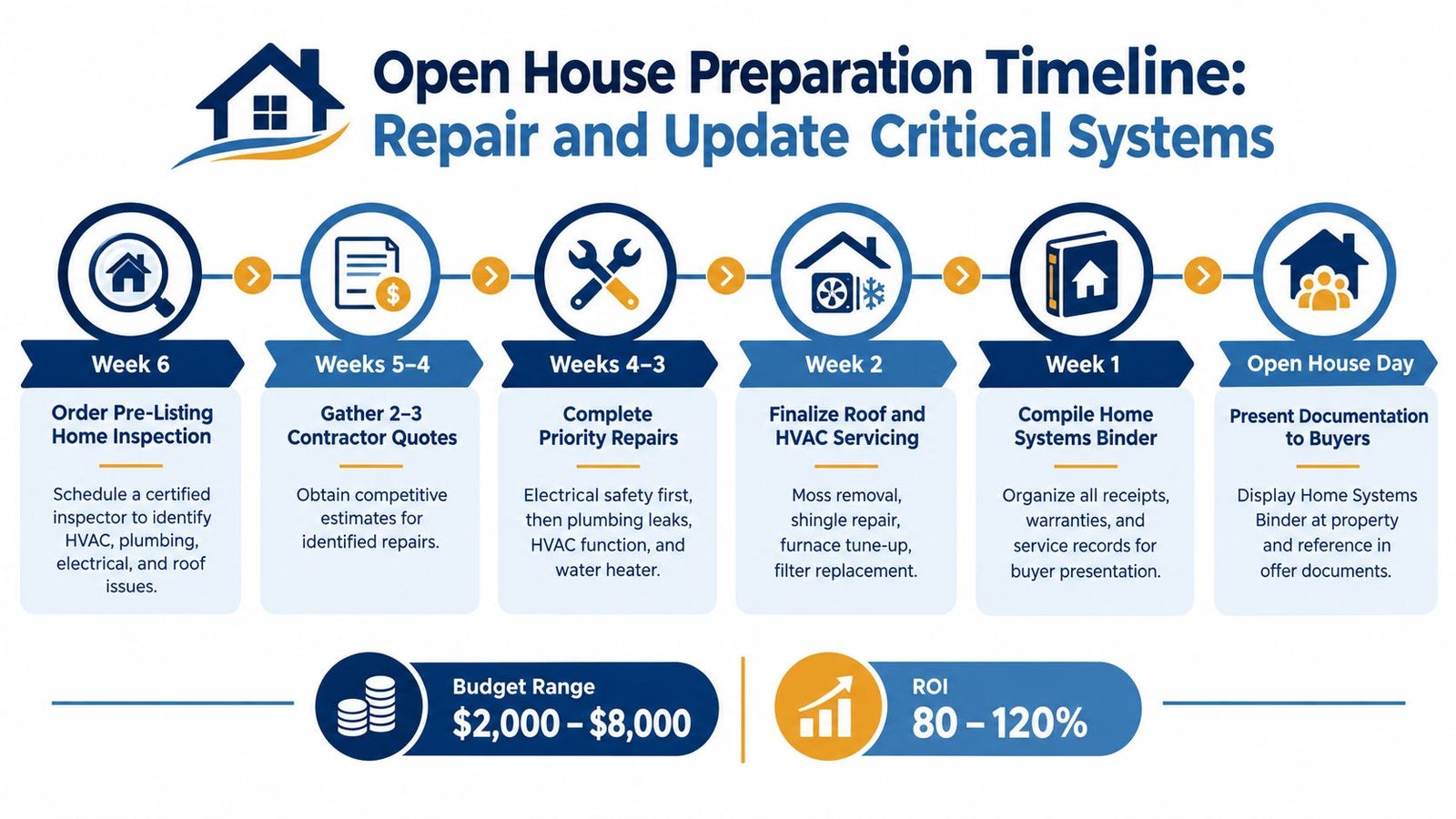
Buyers may forgive dated finishes. They rarely ignore flickering lights, an active plumbing leak, a non-functioning furnace, or an electrical panel that raises safety questions. Repairs should therefore follow risk, visibility, and documentation, not the temptation to update every older component before listing.
Use a pre-listing inspection early enough to identify issues before the marketing story is fixed. A buyer who sees an unresolved defect during an open house may assume the problem is larger than it is. A seller who can show a recent service record, invoice, warranty, or qualified assessment gives the buyer a clearer basis for judgment.
For an older Burnaby home, an electrician might inspect the panel, outlets, switches, and visible wiring. In a North Vancouver townhome, a plumber may replace corroded under-sink connections while a heating technician services the furnace. A Coquitlam condo with an aging water heater may not require immediate replacement, but the seller should understand its condition, remaining service history, and likely buyer questions.
A practical order is electrical safety, active plumbing leaks, heating and ventilation function, then cosmetic corrections. Get competing quotes for significant work, confirm insurance and licensing where relevant, and avoid selecting a contractor solely because the quote is the lowest. The cheapest repair can become expensive if it delays photography or creates an incomplete paper trail.
Keep receipts, permits where applicable, warranties, and service records in a home systems folder. Buyers don't need a sales pitch. They need specific evidence of what was repaired, when it was serviced, and who completed the work.
For buyers who want context on inspections and what they may examine, link them to this home inspection guide for buyers. Sellers should still obtain property-specific advice rather than assuming an open house replaces an inspection.
Don't spend heavily on hidden upgrades to make the home feel newer. Fix conditions that threaten safety, function, financing, insurance, or negotiation. Leave discretionary improvements for the pricing and return analysis, especially in a condo or strata property where some systems aren't the owner's responsibility.
Your open house begins online. Buyers often decide whether a property deserves a visit from its photographs, floor plan, video, and listing description before they ever see the front door. Professional media should therefore reflect the finished presentation, not a work in progress.
Schedule the shoot after cleaning, decluttering, and staging are complete. Give the photographer a floor plan and identify architectural features that deserve attention, such as a view corridor, custom millwork, a flexible den, a well-designed kitchen, or a private outdoor space. Vancouver's grey skies make careful exposure and colour correction valuable, but processing should clarify the home rather than create an unrealistic version of it.
A 3D walkthrough can help buyers understand the relationship between rooms, especially in a condo, split-level home, or property with an unusual layout. Video can add neighbourhood context for relocation buyers, including nearby parks, transit, shops, and the practical route from the home to daily amenities. Drone work may be appropriate for a view property or larger lot, but it isn't automatically useful for every townhouse or apartment.
A luxury West Vancouver home may justify aerial footage, a cinematic video, and a detailed virtual tour. A smaller condo may gain more from accurate photography, a clean floor plan, and a concise walkthrough that makes the layout easy to understand. Don't pay for production that repeats what still images already show.
For Vancouver-specific considerations on image quality, timing, and listing presentation, see this
guide to professional real estate photography for Vancouver listings. The media should be ready before the event so visitors can revisit the property digitally after they leave.
Publish the virtual tour promptly after the shoot, verify room labels and measurements, and remove any item that could mislead a buyer about size, condition, or included features. Strong media earns the first visit. Accurate media supports the second one.
Staging should solve a buyer's question. It can show how a narrow living room works, distinguish a dining area from a passageway, demonstrate that a den fits a desk, or make a vacant home feel proportionate. It shouldn't turn the property into a showroom that hides awkward circulation or suggests furniture the rooms can't realistically accommodate.
A staging consultation is especially useful for vacant homes, dated interiors, unusual floor plans, and properties where the seller's furniture is too large or too personal. Start with the living room, primary bedroom, and kitchen because these areas often carry the strongest emotional and practical weight. In a smaller condo, a compact seating area and clearly defined workspace may communicate more than a large sofa and decorative accessories.

Furniture rental can be worthwhile when the existing pieces make rooms feel crowded, dated, or empty. It may be unnecessary when the seller already owns clean, appropriately scaled furniture and the property only needs editing. Ask the stager for a room-by-room plan, the rental term, delivery and pickup conditions, damage responsibility, and the specific buyer objection the work is intended to address.
Urban Presentations can help with furniture removal and arrangement decisions. For a broader seller-oriented approach, review this practical Vancouver home-staging guide. Prioritize quality and proportion over fashionable styling. Neutral pieces usually support a wider audience, while overly dramatic décor can distract from the home's actual features.
Keep kitchens and bathrooms restrained. Clean surfaces, functional accessories, fresh towels, and clear storage communicate care more effectively than crowded decorative displays. In a luxury property, stage for a lifestyle such as entertaining, relaxing, or working from home, but don't imply a use that the layout cannot support.
A polished home can still feel chaotic if guests don't know where to park, which door to use, or how to move through the property. Build the event around a simple visitor path. Confirm the start and end time, arrange access with the listing team, check strata rules, plan signage, prepare property information, and decide where registration and refreshments will sit.
In Greater Vancouver, the audience for an open house is self-selected. A recent Greater Vancouver and Fraser Valley MLS snapshot recorded open houses on 8.0% of active listings, with 2,334 of 29,155 active listings offering at least one session. The most common time slot was 2:00 pm to 4:00 pm, so a weekend afternoon with a tightly managed presentation may be more useful than leaving the doors open for an unstructured period. See the Metro Vancouver open-house listing snapshot for that market context.
Place signs at key decision points and remove them immediately after the event. A tablet or sign-in sheet can capture names, contact details, representation status, and the visitor's reason for attending, but don't make registration feel like a barrier. Greet visitors at the entrance, explain the flow, then give them room to assess the home privately.
Keep refreshments simple and low risk. Water, coffee, and small, non-sticky items are easier to manage than red drinks or crumbly food near staged furniture. Provide a short feedback card with questions such as:
- Most appealing feature: What would you remember about the home?
- Main concern: Was anything unclear, dated, or difficult to use?
- Next step: Would a private showing or additional information help?
- Representation: Are you already working with a REALTOR®?
In British Columbia, confirm seller authorization before proceeding with an open house and arrange hosting coverage through the brokerage when needed, with informed consent. The
BC open-house guidance for licensees places the seller's wishes and brokerage policies first, which should happen before signage, access, and safety planning.
Buyers aren't evaluating presentation alone. CMHC's 2025 Mortgage Consumer Survey found that 62% of consumers reported concerns or uncertainty during the homebuying process. The leading concerns included paying too much, post-purchase costs, interest-rate increases, unforeseen housing costs, and finding the right home. The survey also reported that 42% of buyers incurred unexpected expenses in 2025, compared with 36% in 2024, with immediate repairs and lawyer or notary fees among the most common expenses. These figures are reported in the CMHC Mortgage Consumer Survey.
That concern changes how you prepare. A buyer who sees a stained ceiling, an old water heater, or a confusing strata issue may calculate a discount before asking a question. Clear records can't remove a genuine defect, but they can show whether the issue was investigated, maintained, repaired, or disclosed.
Gather inspection reports, invoices, warranties, permits where applicable, surveys, insurance information, appliance records, and strata documents. Arrange digital folders for structure, systems, strata, environmental matters, and warranties. Create a short index that points buyers to the most relevant records instead of handing them an unstructured collection.
For a strata property, request records early. Minutes, budgets, depreciation reports, bylaws, insurance information, and notices about possible work can take time to obtain. Never summarize a document in a way that hides an important qualification. Ask the appropriate legal or real estate professional how disclosure should be handled for the specific property.
Link the broader preparation schedule to this Vancouver seller's timeline for preparing a house for sale. A concise executive summary can identify recent replacements, regular servicing, and outstanding questions, while the complete records remain available for serious buyers and their advisers.
In BC rental situations, tenants who won't be home during an open house should secure valuables and restrain or temporarily remove pets, as outlined in BC real estate showing guidance. That instruction belongs in the preparation conversation with the owner, tenant, property manager, and hosting agent.
An open house is one event. Private showings often reveal whether the property can withstand a closer look, a buyer's adviser, and detailed questions about condition, price, documents, and timing. Set the showing process before the open house so a promising visitor can move forward without administrative delay.
Agree on notice requirements, lockbox or concierge access, showing windows, pet arrangements, alarm instructions, and the seller's preferred communication method. For a tenanted condo, coordinate with the tenant and property manager. For a luxury home, control access more carefully and pre-screen visitors through their representatives rather than treating every inquiry as identical.
BC safety guidance recommends limiting a showing to no more than six people, including REALTORS®, occupants, and visitors, and recommends pre-screening buyers. Relevant indicators include whether a buyer has sold or listed a current home, works with a REALTOR®, or has been prequalified for financing.
The BCFSA showing safety guidance provides that operational reference.
Use one feedback form for every private showing. Ask what the buyer liked, what concerned them, how the property compared with alternatives, and whether they want documents or a second visit. Log the date, source of the lead, representation, requested information, objections, and next action.
Don't change price because one visitor disliked the paint colour. Do investigate when several qualified visitors raise the same concern about room function, odour, condition, strata costs, or value. Separate a presentation problem from a pricing problem, then test the least expensive reasonable response first.
After the event, secure the property, check every room, confirm windows and doors, and reconcile any keys or access devices. If anyone in the property is sick, recently travelled, under quarantine, or immunocompromised, don't allow visitors. BC guidance also recommends limiting face-to-face contact where possible, using pre-registration or scheduled attendance, and discussing whether an open house is appropriate with the real estate professional, as described by
BCFSA's open-house caution.
Preparation works best when each task supports the next decision. Confirm seller authorization, tenant arrangements, access rules, condition issues, and vendor availability before committing to a public event. Complete cleaning, decluttering, repairs, and documentation before staging and photography, because unfinished work creates conflicting images and forces buyers to reassess what they saw online.
Finalize the media and staging together. The furniture layout should match the photographs, the floor plan should be accurate, and the visitor materials should answer practical questions without making unsupported promises. Prepare a simple property sheet with features, upgrades, inclusions, parking, storage, strata information where appropriate, and contact details for further questions.
On the event day, remove valuables, personal information, medication, keys, financial papers, and small items that could be misplaced. Tenants should secure valuables and make suitable arrangements for pets. Open interior doors, turn on lights, provide hand sanitizer at the entrance, use signs to guide traffic, and clean and sanitize the property before and after the event. These measures align with the BC guidance for sellers and landlords.
Manage access deliberately. Don't let a crowded room prevent buyers from seeing the kitchen or bedrooms, and don't allow visitors to wander without clear boundaries. A host should welcome people, answer questions, observe traffic, and record useful feedback without hovering. If attendance becomes difficult to control, scheduled visits or a temporary pause can protect both the property and the visitor experience.
Review feedback within 24 to 48 hours, then sort comments into patterns. One buyer's preference is an observation. Repeated concerns from qualified visitors may justify a change to cleaning, staging, documentation, marketing, or pricing. Record the evidence before making a decision, and check whether weather, competing listings, access, or the event schedule affected the result.
A Vancouver seller shouldn't spend automatically on every suggestion. Fix a visible maintenance concern before buying decorative accessories. Clarify strata records before commissioning another video. Improve the entry path before replacing furniture that already fits the rooms. The best open house preparation checklist protects the buyer's confidence while keeping spending connected to a specific problem.
For a complimentary walkthrough, vendor coordination, open-house planning, and follow-up support across Greater Vancouver, contact Jacky Levi at Jacky Levi - Vancouver Realtor. A structured plan can cover condos, townhomes, detached homes, investment properties, and luxury listings while keeping the preparation sequence clear from first inspection through closing.
Jacky Levi - Vancouver Realtor offers listing preparation, staging coordination, professional media planning, open houses, private showings, feedback reporting, and transaction management across Greater Vancouver. Visit Jacky Levi - Vancouver Realtor to arrange a walkthrough and discuss the right preparation sequence for your property.