You're looking at a Vancouver condo, townhome, or detached house and the inspection report is about to turn a promising offer into a list of decisions. A loose handrail may be routine maintenance. An active foundation leak, unsafe electrical panel, or unpermitted basement conversion could affect safety, financing, insurance, resale value, and the price you should pay.
Use this home buying inspection checklist as a decision tool, not just a list of defects. Mark every finding as urgent, near-term, or monitor. Photograph the evidence, record the inspector's explanation, ask targeted follow-up questions, and obtain specialist opinions or written quotes before removing subject conditions. A home inspection is visual and non-invasive, so it won't replace legal advice, engineering, electrical, plumbing, mould, pest, or other specialist assessments.
For example, record: “Moisture at basement northeast wall, urgent, confirm source with waterproofing contractor, negotiate repair or credit because active water may affect habitability and insurance.” The checklist below covers structure, roofing, utilities, moisture, pests, permits, and Vancouver-specific risks, including the document review that condos and townhomes require. Book a qualified inspector early, and contact Jacky Levi for local referrals and transaction guidance before your inspection window becomes tight.
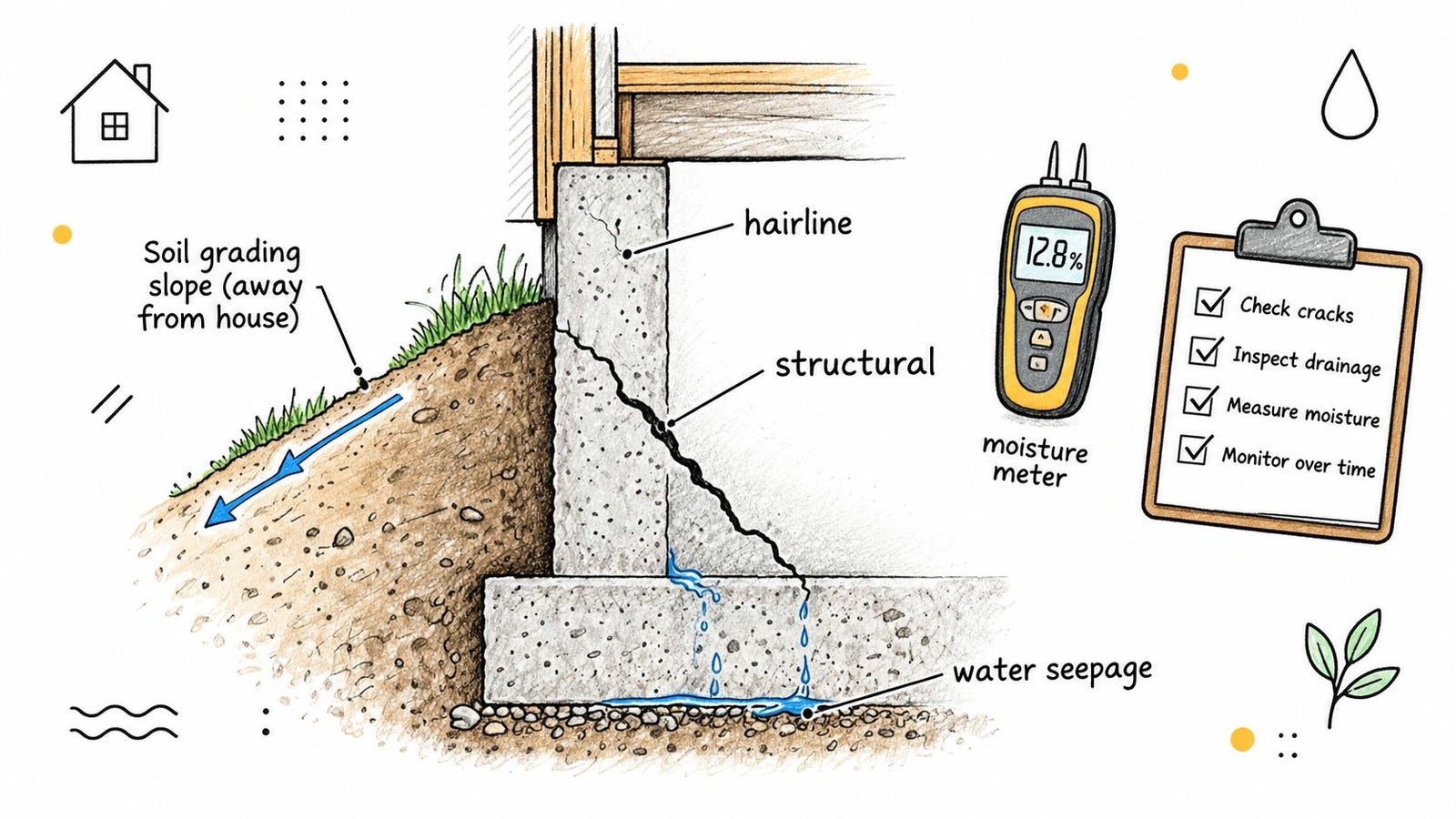
Foundation findings deserve context, not instant panic. A hairline crack with no displacement or moisture may be suitable for monitoring, while widening diagonal cracks, bowing walls, settlement, or active seepage require a more careful decision. Vancouver's rainfall and varied ground conditions make grading, drainage, basement walls, crawl spaces, and concrete surfaces particularly important.
Ask the inspector to identify the crack's location, direction, approximate width, signs of movement, and whether water is entering. Request moisture-meter readings in suspect areas, and ask whether the inspection was able to reach every basement or crawl-space component. If the inspector sees a material structural concern, obtain a structural engineer's report before negotiating from an assumed repair cost.
A Vancouver Westside home from the 1970s might show hairline foundation cracks and minor seepage. If the inspector recommends interior drainage and a sump pump, the buyer can seek a contractor's quote and negotiate a credit rather than treating the issue as an automatic deal-breaker. A North Vancouver home with larger diagonal cracks may need an engineer to confirm whether the movement is non-critical and recommend monitoring or waterproofing.
Inspect the property during wet weather when possible. Walk the perimeter, check whether the soil slopes away from the house, ask about previous foundation repairs and insurance claims, and review the inspector's written limitations. Use this buyer-focused home inspection guide to prepare questions about access, reporting, and follow-up.
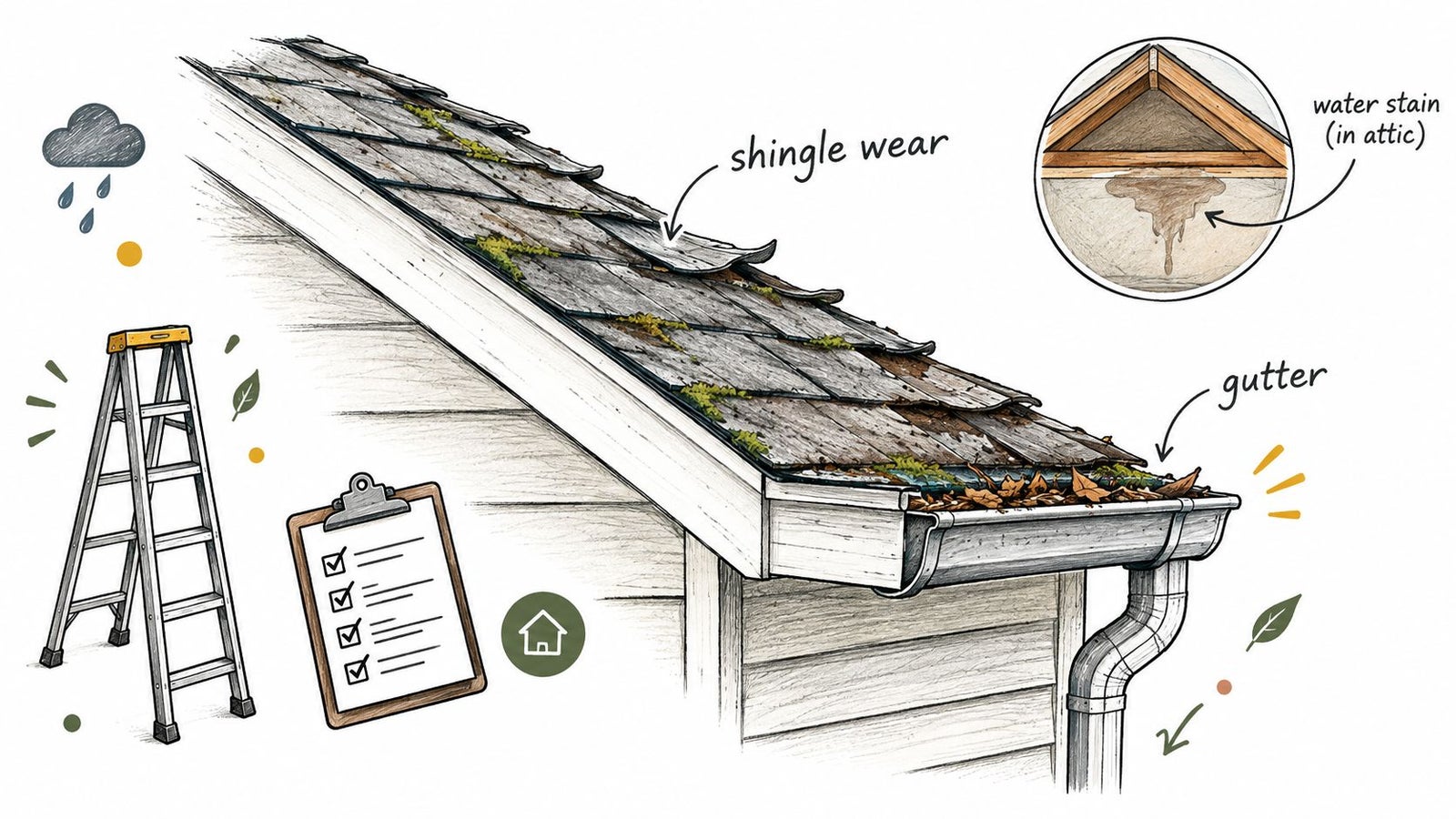
A roof can look acceptable from the driveway while showing trouble in the attic. Ask the inspector to assess the roofing material, visible wear, flashing, gutters, downspouts, roof penetrations, ventilation, and signs of past or active leakage. The report should distinguish between a small maintenance item, a repair needed soon, and a roof approaching replacement.
Walk the perimeter without climbing onto unsafe surfaces. Look for missing, lifted, curled, damaged, or moss-covered shingles, sagging gutters, staining below roof edges, and downspouts that discharge beside the foundation. In the attic, look for water marks, damp sheathing, poor ventilation, and insulation that blocks intended airflow.
An East Vancouver townhome with an older asphalt roof, significant granule loss, and lifted shingles may justify a replacement plan within the near term. The buyer could request a roofing contractor's assessment and negotiate a closing credit tied to that documented work. Conversely, a Burnaby detached home with a recently installed architectural shingle roof, strong maintenance records, and no visible concerns gives the buyer more confidence and may support the seller's pricing position.
Ask for warranty or certification records if the roof was recently replaced. Confirm who maintains the roof in a strata property, because the unit inspection may not establish the condition or replacement plan for the entire building roof. Plan for regular gutter cleaning in Vancouver's wet climate, and don't treat a clean attic as proof that the roof has a long remaining life.
Run water at several fixtures, flush toilets, operate taps, and watch how quickly sinks and tubs drain. The inspector should examine visible supply and drain lines, water pressure, leaks, shut-off valves, the water heater, and the apparent pipe material. Older homes may contain copper, PVC, or polybutylene supply lines, and the material can change the follow-up questions you need to ask.
Find the main water shut-off and make sure you know whether it operates. Ask for plumbing diagrams and repair records if they're available. A home can have attractive finishes and still carry a substantial plumbing risk behind walls, under floors, or in a shared building system.
A North Vancouver home from the 1980s with original polybutylene supply lines may warrant a licensed plumber's assessment and a replacement strategy. The buyer could negotiate seller-funded replumbing, a price adjustment, or another remedy that reflects the confirmed scope. In a Richmond condo, slow kitchen drains and prior water damage might lead a plumber to identify a partial blockage that can be resolved before closing, rather than a whole-system failure.
Use the priority system carefully:
Ask the inspector which findings require a plumber rather than a general repair contractor. Also ask whether water quality testing is appropriate for the property's history or water source. Negotiate from a written assessment, not from a rough assumption based only on a slow drain or discoloured fixture water.
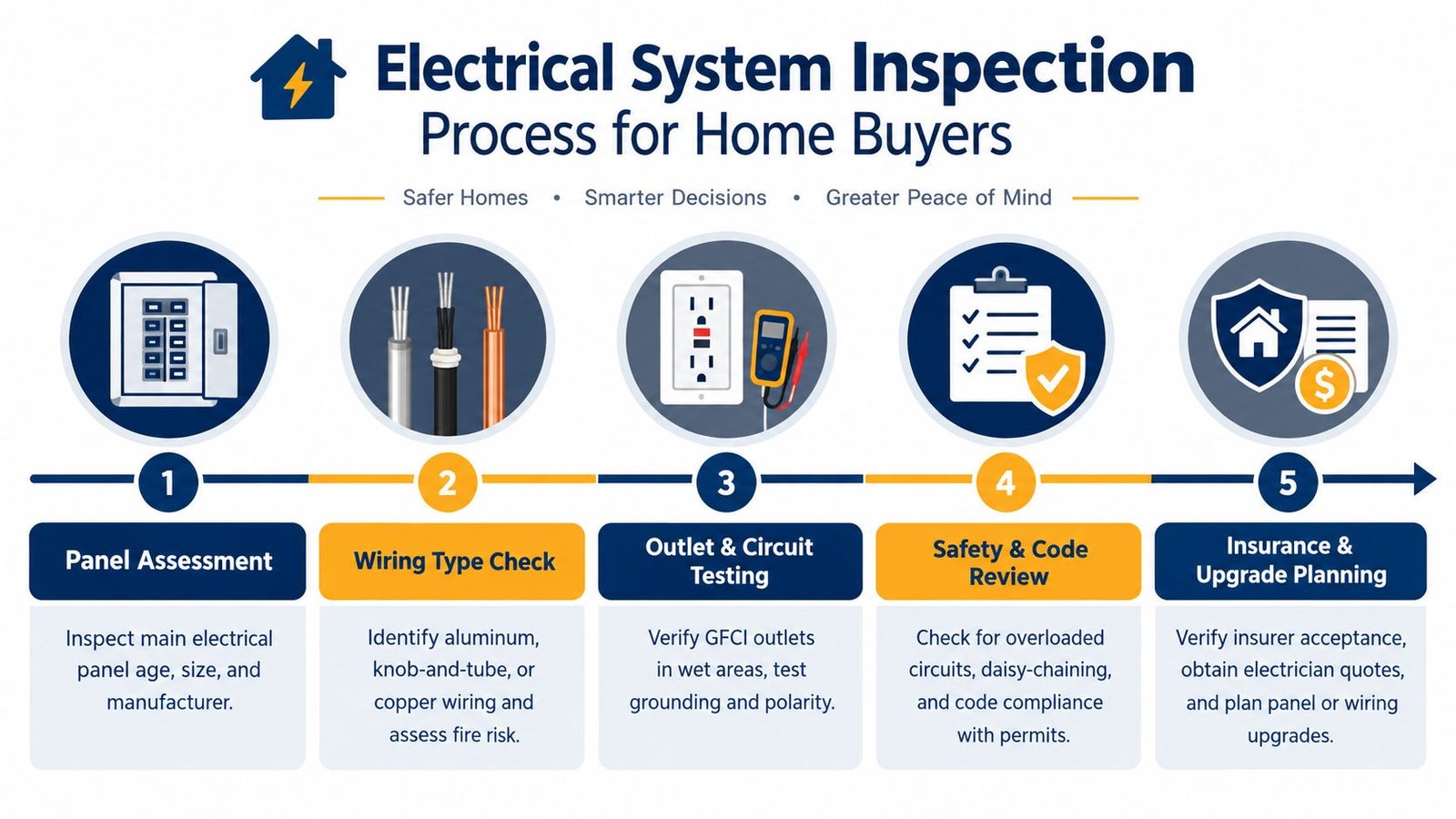
Electrical defects can affect both occupant safety and insurance acceptance. Have the inspector examine the service panel, breakers or fuses, visible wiring, grounding, outlets, switches, GFCI protection, and signs of overheating or overloading. The report should identify what was tested and what remained inaccessible.
Test outlets with an appropriate plug tester where permitted, but don't remove panel covers or disturb wiring yourself. Ask for permits and final documentation for upgrades, especially where the seller describes a recent panel replacement, rewiring, EV-charging installation, heat-pump connection, or renovation.
A Coquitlam home from the 1960s with original aluminum wiring and an outdated fuse box needs more than a casual repair estimate. The buyer should obtain an electrician's assessment, confirm the insurer's position, and negotiate a properly documented upgrade or a price adjustment. A Vancouver Eastside townhome with a modern 200-amp panel, GFCI protection, and permitted recent electrical work presents a different risk profile and can reasonably be treated as a positive feature.
Check whether the service has enough capacity for expected loads such as an EV charger, heat pump, induction range, or extensive workshop equipment. Ask the inspector to separate immediate hazards from older components that remain functional but may require specialist review. If aluminum or knob-and-tube wiring appears, use a licensed electrician, document the findings, and make the contract decision with insurance and remediation implications in view.
Heating and ventilation affect comfort, indoor air, operating costs, and replacement planning. Ask the inspector to test the furnace or heat pump, thermostat, ductwork, registers, ventilation, and any cooling equipment that's accessible and safe to operate. The same visit should create a timeline for the hot-water tank and included appliances, including the dishwasher, range, refrigerator, laundry machines, and garage-door opener.
Record each system's make, model, serial number, apparent age, condition, service history, and next action. Don't let a working system receive a “good” label without understanding whether it's likely to need replacement soon. A near-term reserve can matter in your offer even when the equipment is operating normally.
A North Vancouver home with an older furnace that still works may need a replacement plan rather than an immediate repair demand. A Richmond detached home with a recently installed high-efficiency heat pump, remote thermostat, and documented annual maintenance gives the buyer stronger evidence of recent investment. If an older furnace and hot-water tank appear together, obtain replacement quotes and discuss the combined timing with your REALTOR®.
For a practical ownership-planning perspective, review the real cost of maintaining a detached home in Vancouver. Treat any precise replacement estimate as a contractor question, not as a conclusion from the inspection report alone.
Poor ventilation can convert ordinary indoor humidity into condensation, rot, mould, and concealed roof damage. Ask the inspector to examine attic insulation, soffit and ridge ventilation, exhaust ducting, roof penetrations, visible moisture, and pest damage. Crawl spaces also need attention, particularly where insulation, vapour barriers, standing water, or exposed wood are present.
The key question isn't only whether insulation exists. Ask whether it's continuous, dry, appropriately installed, and compatible with the ventilation design. Bathroom and kitchen exhaust should discharge outdoors, not into an attic or enclosed cavity. Moisture readings and photographs help establish whether a defect is active or historical.
A Burnaby home built in the 1980s might have minimal attic insulation and a bathroom fan venting into the attic. The appropriate next step is to reroute the exhaust, assess the moisture damage, and obtain an insulation quote. A newer West Vancouver home with strong insulation coverage, effective ridge and soffit ventilation, and properly ducted exhaust creates less immediate moisture concern.
Use a short attic question set:
Don't assume that adding insulation solves a ventilation defect. Extra insulation can hide problems or restrict airflow if installed incorrectly, so coordinate the work with a qualified contractor.
A window or door issue can be cosmetic, operational, or a sign of water entry. Open, close, lock, and inspect accessible windows and doors. Look at glazing, frames, weather stripping, exterior caulking, interior trim, condensation between panes, staining, rot, and mould-like discolouration.
Prioritize failed seals and active water evidence over appearance. A fogged pane may need replacement, while staining or soft wood around a frame requires investigation into the source and surrounding wall assembly. Ask whether the building or strata has records of window replacement, envelope repairs, leaks, or warranty work.
A Vancouver Westside home with original single-pane wood windows, failed seals, condensation, and prior water damage around several frames may justify a staged replacement plan. The buyer can obtain a window contractor's quote and negotiate a credit or price adjustment based on the documented scope. A North Vancouver condo with newer triple-pane windows, sound weather sealing, and no evidence of intrusion provides more confidence, although the buyer should still review building-level envelope records.
Check doors for threshold damage, poor alignment, missing weather stripping, and water marks. Ask the inspector to distinguish maintenance caulking from a possible building-envelope problem. In a strata property, confirm whether windows and exterior doors are the owner's responsibility or common property, then match your negotiation request to the party that can legally complete the work.
Moisture findings should be traced to a source before you negotiate a remedy. Inspect basements, crawl spaces, utility rooms, bathrooms, kitchens, ceilings, exterior walls, and areas around windows. Ask where the inspector used a moisture meter, what readings were abnormal relative to surrounding areas, and whether the source is active, repaired, or unknown.
Richmond's wet conditions can expose drainage and basement problems that remain hidden during a dry visit. A basement with visible mould-like growth and high humidity needs a professional assessment, source control, and remediation planning. A Coquitlam crawl space with an intact vapour barrier, a functioning sump pump, and controlled moisture readings tells a different story, provided the inspector can verify the relevant areas.
Use this evidence hierarchy:
Active water: Trace the entry point and seek a waterproofing, drainage, plumbing, or roofing specialist.
Visible mould-like material: Arrange a qualified mould assessment and avoid relying on paint or surface cleaning.
Past damage: Request remediation records, invoices, photographs, and evidence that the source was corrected.
Condensation: Check ventilation, insulation, indoor humidity, and cold-surface conditions.
If the inspection identifies a concern, contact Inspect Canada through this local inspection resource for a suitable referral. A video can also help you understand why visible staining and moisture readings need to be interpreted together.
Don't accept a seller's promise to “keep an eye on it” when water is active. Ask for a defined scope, qualified contractor, completion evidence, and a clear contract remedy.
A polished renovation can conceal an unresolved documentation problem. Ask the seller for permits, final inspection records, invoices, plans, and contractor details for structural, electrical, plumbing, suite, and major interior work. Then verify the permit history with the applicable municipality, such as Vancouver, Burnaby, Coquitlam, Richmond, or North Vancouver.
The inspector may identify signs of alteration, but an inspection report isn't a permit search or a legal opinion. Unpermitted work can affect insurance, financing, future resale, and responsibility for correcting deficiencies. It can also make a seemingly simple negotiation difficult because the buyer may not know whether the work meets code or whether a municipality will require changes.
A Coquitlam home with a finished basement bedroom added without permits presents several questions: Is the room legally usable as represented? Can the seller obtain a retroactive permit? Will remediation be required? A Vancouver Eastside condo renovation with permits and final inspection certificates gives the buyer a clearer record and a stronger basis for accepting the work.
Keep your document requests specific:
For Vancouver condo buyers, this guide to Form B and the Information Certificate helps place the physical inspection alongside strata documentation. A clean unit inspection doesn't establish that common-property work, alterations, or building records are complete.
Pest evidence often follows moisture, concealed wood, poor drainage, or wood-to-soil contact. Examine accessible crawl spaces, basements, rim joists, decks, retaining elements, and exterior wood for sawdust, tunnels, damaged fibres, droppings, mud tubes, or weakened framing. Don't probe unsafe areas or assume that the absence of visible insects proves there's no historic damage.
A North Vancouver home with carpenter-ant activity around a basement rim joist may need both pest treatment and wood repair. The buyer should obtain a licensed pest professional's report, confirm the extent of structural damage, and negotiate completion or a credit tied to the written scope. A Richmond home with sound drainage, appropriate clearance, low moisture, and no visible pest evidence offers greater confidence, but the report should still state the inspection's access limitations.
Ask targeted questions:
Activity: Is the evidence current, old, or inconclusive?
Damage: Does the wood remain structurally sound?
Cause: Is moisture, debris, vegetation, or soil contact attracting pests?
Treatment: What professional should assess and complete the work?
Records: Has the seller used pest control or held a service warranty?
Pest work isn't automatically a reason to walk away. The decision depends on active activity, structural involvement, treatment access, recurring moisture, and whether the seller will provide credible documentation. Treat concealed wood damage as a specialist issue, not as a cosmetic repair.
Structural Integrity and Foundation Inspection
Plumbing System and Water Quality
Complexity: Moderate-high, may need a licensed plumber for pipe replacement.
Resources and Cost: Replumbing $8,000-$20,000+, water heater $2,000-$4,500.
Expected Outcomes: Identifies leaks, pipe materials, pressure, and water-quality issues.
Ideal Use Cases: Homes with polybutylene or galvanized pipes, slow drains, or discoloration.
Key Advantages: Helps avoid in-wall failures and plan replumbing costs.
Electrical System and Panel Safety
Complexity: High, electrician required for upgrades and permits.
Resources and Cost: Panel upgrades $3,000-$10,000+, aluminum or knob-and-tube remediation can cost more.
Expected Outcomes: Reveals fire hazards, code non-compliance, and insurance impacts.
Ideal Use Cases: Older homes from the 1960s to 1980s, aluminum wiring, fuse boxes.
Key Advantages: Reduces fire risk, supports insurability, and improves electrical capacity.
HVAC System and Major Systems Timeline
Complexity: Moderate, functional tests plus contractor quotes for replacement.
Resources and Cost: Furnace $4,000-$8,000+, heat pump $8,000-$15,000+, appliance costs vary.
Expected Outcomes: Documents remaining lifespans, efficiency, and maintenance needs.
Ideal Use Cases: Older HVAC or appliance systems, buyers focused on energy savings.
Key Advantages: Supports replacement budgeting, lower operating costs, and possible rebate access.
Insulation and Ventilation (Attic/Crawl)
Complexity: Low-moderate, visual and R-value checks, possible contractor follow-up.
Resources and Cost: Insulation upgrades $1,500-$3,500, ventilation fixes vary.
Expected Outcomes: Improves energy efficiency and reduces moisture and ice-dam risk.
Ideal Use Cases: Low R-value attics, exhaust venting into the attic, mold-prone homes.
Key Advantages: Can reduce utility bills and help prevent moisture damage.
Windows, Doors, and Exterior Sealing
Complexity: Low-moderate, visual checks, operation testing, and seal review.
Resources and Cost: Full replacement $15,000-$40,000+, selective repairs cost less.
Expected Outcomes: Reduces drafts and water intrusion, improves energy and sound insulation.
Ideal Use Cases: Single-pane or failed-seal windows, visible frame rot, or leaks.
Key Advantages: Improves comfort, efficiency, and protection against water damage.
Moisture, Mold, and Water Damage Assessment
Complexity: Moderate-high, moisture meters plus mold specialists if needed.
Resources and Cost: Remediation $2,000-$10,000+, drainage and sump work varies.
Expected Outcomes: Identifies moisture sources, mold presence, health risks, and a remediation path.
Ideal Use Cases: Musty odors, damp basements or crawl spaces, prior leaks.
Key Advantages: Protects occupant health and supports root-cause repairs.
Permits, Building Code Compliance & Renovation Docs
Complexity: Moderate, requires municipal record research and sometimes legal or building consultants.
Resources and Cost: Retroactive permits and remediation costs vary, consultant and legal fees may apply.
Expected Outcomes: Verifies permitted work and highlights financing, insurance, and resale risks.
Ideal Use Cases: Homes with recent renovations, older properties, or DIY work.
Key Advantages: Helps confirm code compliance and reduce liability.
Pest Inspection and Structural Pest Damage
Complexity: Low-moderate, visual checks plus pest-control confirmation if needed.
Resources and Cost: Treatment $1,500-$10,000+, structural repairs add cost.
Expected Outcomes: Detects termite or ant activity, wood damage, and needed treatment.
Ideal Use Cases: Crawl spaces, wood-to-soil contact, and damp conditions.
Key Advantages: Helps prevent structural loss and creates negotiation leverage.
The inspection report is useful only when it changes a decision. Start by separating active safety and water issues from ordinary maintenance, ageing components, cosmetic wear, and improvements you'd choose to make after possession. A loose cabinet hinge and an active foundation leak may appear on the same report, but they shouldn't receive the same priority, negotiation effort, or specialist response.
For condos and townhomes, add the building-level review. Consumer Protection BC says home-inspection contracts must identify whether mould and asbestos are included and must state what isn't covered. Its consumer guidance also describes inspections as non-invasive and limited to accessible components, while BC Housing advises strata buyers to investigate unit and common-property defects through the strata process. A clean unit report therefore doesn't prove that the roof, exterior envelope, parkade, plumbing infrastructure, or other common property is low-risk. Review the Form B, Information Certificate, depreciation report, meeting minutes, repair notices, and insurance information with the appropriate professionals.
B.C. has made inspector licensing part of consumer protection. Consumer Protection BC's industry backgrounder records licensed inspectors rising from 470 in 2021 to 472 in 2022, 477 in 2023, 489 in 2024, and 514 in 2025. Those figures come from the Consumer Protection BC home-inspection industry backgrounder, and they reinforce the practical point: confirm that your inspector is licensed and understand the scope of the service.
Follow this action sequence:
Review the report: Read the summary, limitations, photographs, and inaccessible areas.
Rank findings: Separate urgent safety or active-water concerns from near-term replacements and monitoring.
Obtain written quotes: Use engineers, electricians, plumbers, roofers, mould specialists, pest professionals, or other qualified trades where appropriate.
Verify implications: Confirm insurance acceptance, permit history, strata responsibility, and legal exposure.
Choose your response: Proceed, request repairs, seek a credit or price adjustment, amend conditions, or walk away within the contract timeline.
A practical example is an active roof leak beside an ageing dishwasher. The dishwasher may need replacement eventually, but the leak can damage structure, insulation, finishes, and electrical components now. Address the leak first, then decide whether the appliance belongs in the negotiation at all.
California buyers face a different contract environment, but the principle of early action is useful. The California Department of Real Estate advises buyers to include inspection as an offer contingency and recommends professional review of electrical, plumbing, HVAC, roof, foundation, septic where present, solar where present, and structural integrity. California law also gives buyers a statutory right to conduct inspections and other studies at their expense unless the parties agree otherwise, with the purchase obligation potentially conditioned on approval of the results. A California buyer should preserve those rights in the purchase agreement and book the inspection early in the contingency period.
The California Department of Real Estate also says sellers are principally responsible for disclosures, while agents must visually inspect and disclose readily observable defects. Buyers should compare disclosures with the inspector's findings rather than accepting either document in isolation. In standard California purchase-agreement practice, the common inspection-contingency period is 17 days, so a buyer who wants foundation, sewer-line, attic, and roof inspections should schedule them immediately and review the results before the deadline. These California points are described in the Department of Real Estate buyer guidance, the California inspection-rights explanation, the Department of Real Estate disclosure guidance, and this California contingency timeline explanation.
For B.C. buyers, the decision still belongs inside the offer's actual subject-removal deadlines. Discuss the report and proposed response with your REALTOR® and lawyer, keep requests precise, and make sure any agreed repair includes completion standards, receipts, permits, warranties, and evidence of payment where appropriate. If you're buying a Vancouver condo, townhome, or detached home, arrange the inspection before the condition deadline and contact Jacky Levi for Greater Vancouver inspector, contractor, and transaction-coordination referrals.
Jacky Levi - Vancouver Realtor provides buyer representation, inspection-related referrals, offer strategy, negotiation, and transaction coordination for condos, townhomes, and detached homes across Greater Vancouver. Visit Jacky Levi - Vancouver Realtor to connect your inspection findings with local professionals and a clearly documented purchase decision.
Use this home buying inspection checklist as a decision tool, not just a list of defects. Mark every finding as urgent, near-term, or monitor. Photograph the evidence, record the inspector's explanation, ask targeted follow-up questions, and obtain specialist opinions or written quotes before removing subject conditions. A home inspection is visual and non-invasive, so it won't replace legal advice, engineering, electrical, plumbing, mould, pest, or other specialist assessments.
For example, record: “Moisture at basement northeast wall, urgent, confirm source with waterproofing contractor, negotiate repair or credit because active water may affect habitability and insurance.” The checklist below covers structure, roofing, utilities, moisture, pests, permits, and Vancouver-specific risks, including the document review that condos and townhomes require. Book a qualified inspector early, and contact Jacky Levi for local referrals and transaction guidance before your inspection window becomes tight.
1. Structural Integrity and Foundation Inspection
Foundation findings deserve context, not instant panic. A hairline crack with no displacement or moisture may be suitable for monitoring, while widening diagonal cracks, bowing walls, settlement, or active seepage require a more careful decision. Vancouver's rainfall and varied ground conditions make grading, drainage, basement walls, crawl spaces, and concrete surfaces particularly important.
Ask the inspector to identify the crack's location, direction, approximate width, signs of movement, and whether water is entering. Request moisture-meter readings in suspect areas, and ask whether the inspection was able to reach every basement or crawl-space component. If the inspector sees a material structural concern, obtain a structural engineer's report before negotiating from an assumed repair cost.
Practical rule: A repair recommendation is more useful when it identifies the cause, the required trade, and whether the work needs engineering or permits.
A Vancouver Westside home from the 1970s might show hairline foundation cracks and minor seepage. If the inspector recommends interior drainage and a sump pump, the buyer can seek a contractor's quote and negotiate a credit rather than treating the issue as an automatic deal-breaker. A North Vancouver home with larger diagonal cracks may need an engineer to confirm whether the movement is non-critical and recommend monitoring or waterproofing.
Inspect the property during wet weather when possible. Walk the perimeter, check whether the soil slopes away from the house, ask about previous foundation repairs and insurance claims, and review the inspector's written limitations. Use this buyer-focused home inspection guide to prepare questions about access, reporting, and follow-up.
2. Roof Condition and Remaining Lifespan
A roof can look acceptable from the driveway while showing trouble in the attic. Ask the inspector to assess the roofing material, visible wear, flashing, gutters, downspouts, roof penetrations, ventilation, and signs of past or active leakage. The report should distinguish between a small maintenance item, a repair needed soon, and a roof approaching replacement.
Walk the perimeter without climbing onto unsafe surfaces. Look for missing, lifted, curled, damaged, or moss-covered shingles, sagging gutters, staining below roof edges, and downspouts that discharge beside the foundation. In the attic, look for water marks, damp sheathing, poor ventilation, and insulation that blocks intended airflow.
An East Vancouver townhome with an older asphalt roof, significant granule loss, and lifted shingles may justify a replacement plan within the near term. The buyer could request a roofing contractor's assessment and negotiate a closing credit tied to that documented work. Conversely, a Burnaby detached home with a recently installed architectural shingle roof, strong maintenance records, and no visible concerns gives the buyer more confidence and may support the seller's pricing position.
Roof condition is a negotiation issue only when you connect the observation to evidence, timing, and a credible scope of work.
Ask for warranty or certification records if the roof was recently replaced. Confirm who maintains the roof in a strata property, because the unit inspection may not establish the condition or replacement plan for the entire building roof. Plan for regular gutter cleaning in Vancouver's wet climate, and don't treat a clean attic as proof that the roof has a long remaining life.
3. Plumbing System and Water Quality
Run water at several fixtures, flush toilets, operate taps, and watch how quickly sinks and tubs drain. The inspector should examine visible supply and drain lines, water pressure, leaks, shut-off valves, the water heater, and the apparent pipe material. Older homes may contain copper, PVC, or polybutylene supply lines, and the material can change the follow-up questions you need to ask.
Find the main water shut-off and make sure you know whether it operates. Ask for plumbing diagrams and repair records if they're available. A home can have attractive finishes and still carry a substantial plumbing risk behind walls, under floors, or in a shared building system.
A North Vancouver home from the 1980s with original polybutylene supply lines may warrant a licensed plumber's assessment and a replacement strategy. The buyer could negotiate seller-funded replumbing, a price adjustment, or another remedy that reflects the confirmed scope. In a Richmond condo, slow kitchen drains and prior water damage might lead a plumber to identify a partial blockage that can be resolved before closing, rather than a whole-system failure.
Use the priority system carefully:
- Urgent: Active leaks, failed shut-offs, unsafe water-heater conditions, or damage that's still spreading.
- Near-term: Deteriorated supply lines, recurring slow drains, corrosion, or a water heater nearing the end of its serviceable condition.
- Monitor: Minor seepage at a connection, provided the cause is understood and no concealed damage is suspected.
Ask the inspector which findings require a plumber rather than a general repair contractor. Also ask whether water quality testing is appropriate for the property's history or water source. Negotiate from a written assessment, not from a rough assumption based only on a slow drain or discoloured fixture water.
4. Electrical System and Panel Safety
Electrical defects can affect both occupant safety and insurance acceptance. Have the inspector examine the service panel, breakers or fuses, visible wiring, grounding, outlets, switches, GFCI protection, and signs of overheating or overloading. The report should identify what was tested and what remained inaccessible.
Test outlets with an appropriate plug tester where permitted, but don't remove panel covers or disturb wiring yourself. Ask for permits and final documentation for upgrades, especially where the seller describes a recent panel replacement, rewiring, EV-charging installation, heat-pump connection, or renovation.
A Coquitlam home from the 1960s with original aluminum wiring and an outdated fuse box needs more than a casual repair estimate. The buyer should obtain an electrician's assessment, confirm the insurer's position, and negotiate a properly documented upgrade or a price adjustment. A Vancouver Eastside townhome with a modern 200-amp panel, GFCI protection, and permitted recent electrical work presents a different risk profile and can reasonably be treated as a positive feature.
Ask the insurer before you waive conditions: Electrical work that seems manageable to a buyer may still require confirmation from the insurance company.
Check whether the service has enough capacity for expected loads such as an EV charger, heat pump, induction range, or extensive workshop equipment. Ask the inspector to separate immediate hazards from older components that remain functional but may require specialist review. If aluminum or knob-and-tube wiring appears, use a licensed electrician, document the findings, and make the contract decision with insurance and remediation implications in view.
5. HVAC and Major Systems Timeline
Heating and ventilation affect comfort, indoor air, operating costs, and replacement planning. Ask the inspector to test the furnace or heat pump, thermostat, ductwork, registers, ventilation, and any cooling equipment that's accessible and safe to operate. The same visit should create a timeline for the hot-water tank and included appliances, including the dishwasher, range, refrigerator, laundry machines, and garage-door opener.
Record each system's make, model, serial number, apparent age, condition, service history, and next action. Don't let a working system receive a “good” label without understanding whether it's likely to need replacement soon. A near-term reserve can matter in your offer even when the equipment is operating normally.
A North Vancouver home with an older furnace that still works may need a replacement plan rather than an immediate repair demand. A Richmond detached home with a recently installed high-efficiency heat pump, remote thermostat, and documented annual maintenance gives the buyer stronger evidence of recent investment. If an older furnace and hot-water tank appear together, obtain replacement quotes and discuss the combined timing with your REALTOR®.
- Test distribution: Run heating or cooling at multiple registers and note uneven airflow.
- Check maintenance: Request service records and ask whether professional cleaning occurred.
- Review safety: Confirm clearances, venting, combustion conditions, and visible damage.
- Document appliances: Verify that included appliances work and that warranties transfer.
For a practical ownership-planning perspective, review the real cost of maintaining a detached home in Vancouver. Treat any precise replacement estimate as a contractor question, not as a conclusion from the inspection report alone.
6. Insulation and Ventilation in Attic and Crawl Space
Poor ventilation can convert ordinary indoor humidity into condensation, rot, mould, and concealed roof damage. Ask the inspector to examine attic insulation, soffit and ridge ventilation, exhaust ducting, roof penetrations, visible moisture, and pest damage. Crawl spaces also need attention, particularly where insulation, vapour barriers, standing water, or exposed wood are present.
The key question isn't only whether insulation exists. Ask whether it's continuous, dry, appropriately installed, and compatible with the ventilation design. Bathroom and kitchen exhaust should discharge outdoors, not into an attic or enclosed cavity. Moisture readings and photographs help establish whether a defect is active or historical.
A Burnaby home built in the 1980s might have minimal attic insulation and a bathroom fan venting into the attic. The appropriate next step is to reroute the exhaust, assess the moisture damage, and obtain an insulation quote. A newer West Vancouver home with strong insulation coverage, effective ridge and soffit ventilation, and properly ducted exhaust creates less immediate moisture concern.
Use a short attic question set:
- Moisture: Where were readings taken, and which areas were inaccessible?
- Airflow: Are soffit, ridge, gable, or mechanical vents functioning as intended?
- Exhaust: Does every bathroom and kitchen fan terminate outside?
- Damage: Is there staining, mould-like growth, rot, or pest activity?
- Follow-up: Does the finding need an insulation contractor, roofer, or mould specialist?
Don't assume that adding insulation solves a ventilation defect. Extra insulation can hide problems or restrict airflow if installed incorrectly, so coordinate the work with a qualified contractor.
7. Windows, Doors, and Exterior Sealing
A window or door issue can be cosmetic, operational, or a sign of water entry. Open, close, lock, and inspect accessible windows and doors. Look at glazing, frames, weather stripping, exterior caulking, interior trim, condensation between panes, staining, rot, and mould-like discolouration.
Prioritize failed seals and active water evidence over appearance. A fogged pane may need replacement, while staining or soft wood around a frame requires investigation into the source and surrounding wall assembly. Ask whether the building or strata has records of window replacement, envelope repairs, leaks, or warranty work.
A Vancouver Westside home with original single-pane wood windows, failed seals, condensation, and prior water damage around several frames may justify a staged replacement plan. The buyer can obtain a window contractor's quote and negotiate a credit or price adjustment based on the documented scope. A North Vancouver condo with newer triple-pane windows, sound weather sealing, and no evidence of intrusion provides more confidence, although the buyer should still review building-level envelope records.
Look beyond the glass: Water often enters through failed perimeter sealing, flashing, cladding transitions, or adjacent assemblies rather than through the pane itself.
Check doors for threshold damage, poor alignment, missing weather stripping, and water marks. Ask the inspector to distinguish maintenance caulking from a possible building-envelope problem. In a strata property, confirm whether windows and exterior doors are the owner's responsibility or common property, then match your negotiation request to the party that can legally complete the work.
8. Moisture, Mold, and Water Damage Assessment
Moisture findings should be traced to a source before you negotiate a remedy. Inspect basements, crawl spaces, utility rooms, bathrooms, kitchens, ceilings, exterior walls, and areas around windows. Ask where the inspector used a moisture meter, what readings were abnormal relative to surrounding areas, and whether the source is active, repaired, or unknown.
Richmond's wet conditions can expose drainage and basement problems that remain hidden during a dry visit. A basement with visible mould-like growth and high humidity needs a professional assessment, source control, and remediation planning. A Coquitlam crawl space with an intact vapour barrier, a functioning sump pump, and controlled moisture readings tells a different story, provided the inspector can verify the relevant areas.
Use this evidence hierarchy:
Active water: Trace the entry point and seek a waterproofing, drainage, plumbing, or roofing specialist.
Visible mould-like material: Arrange a qualified mould assessment and avoid relying on paint or surface cleaning.
Past damage: Request remediation records, invoices, photographs, and evidence that the source was corrected.
Condensation: Check ventilation, insulation, indoor humidity, and cold-surface conditions.
If the inspection identifies a concern, contact Inspect Canada through this local inspection resource for a suitable referral. A video can also help you understand why visible staining and moisture readings need to be interpreted together.
Don't accept a seller's promise to “keep an eye on it” when water is active. Ask for a defined scope, qualified contractor, completion evidence, and a clear contract remedy.
9. Permits, Building Code Compliance, and Renovation Documentation
A polished renovation can conceal an unresolved documentation problem. Ask the seller for permits, final inspection records, invoices, plans, and contractor details for structural, electrical, plumbing, suite, and major interior work. Then verify the permit history with the applicable municipality, such as Vancouver, Burnaby, Coquitlam, Richmond, or North Vancouver.
The inspector may identify signs of alteration, but an inspection report isn't a permit search or a legal opinion. Unpermitted work can affect insurance, financing, future resale, and responsibility for correcting deficiencies. It can also make a seemingly simple negotiation difficult because the buyer may not know whether the work meets code or whether a municipality will require changes.
A Coquitlam home with a finished basement bedroom added without permits presents several questions: Is the room legally usable as represented? Can the seller obtain a retroactive permit? Will remediation be required? A Vancouver Eastside condo renovation with permits and final inspection certificates gives the buyer a clearer record and a stronger basis for accepting the work.
Keep your document requests specific:
- Work history: What changed, when, and who completed it?
- Municipal record: What permits were issued, and were final inspections completed?
- Technical scope: Were load-bearing walls, plumbing, electrical, or ventilation altered?
- Risk allocation: Who handles corrections, and what survives closing?
- Legal review: Does the agreement need special wording or disclosure?
For Vancouver condo buyers, this guide to Form B and the Information Certificate helps place the physical inspection alongside strata documentation. A clean unit inspection doesn't establish that common-property work, alterations, or building records are complete.
10. Pest Inspection and Structural Pest Damage
Pest evidence often follows moisture, concealed wood, poor drainage, or wood-to-soil contact. Examine accessible crawl spaces, basements, rim joists, decks, retaining elements, and exterior wood for sawdust, tunnels, damaged fibres, droppings, mud tubes, or weakened framing. Don't probe unsafe areas or assume that the absence of visible insects proves there's no historic damage.
A North Vancouver home with carpenter-ant activity around a basement rim joist may need both pest treatment and wood repair. The buyer should obtain a licensed pest professional's report, confirm the extent of structural damage, and negotiate completion or a credit tied to the written scope. A Richmond home with sound drainage, appropriate clearance, low moisture, and no visible pest evidence offers greater confidence, but the report should still state the inspection's access limitations.
Ask targeted questions:
Activity: Is the evidence current, old, or inconclusive?
Damage: Does the wood remain structurally sound?
Cause: Is moisture, debris, vegetation, or soil contact attracting pests?
Treatment: What professional should assess and complete the work?
Records: Has the seller used pest control or held a service warranty?
Pest work isn't automatically a reason to walk away. The decision depends on active activity, structural involvement, treatment access, recurring moisture, and whether the seller will provide credible documentation. Treat concealed wood damage as a specialist issue, not as a cosmetic repair.
10-Point Home Inspection Comparison
Structural Integrity and Foundation Inspection
- Complexity: High, may require a structural engineer and invasive follow-up.
- Resources and Cost: Specialist assessment, repairs frequently $15,000-$50,000+.
- Expected Outcomes: Detects cracks, water intrusion, and settlement. Informs negotiation and insurance.
- Ideal Use Cases: Older homes, visible cracks, wet or clay soils, purchase contingency reviews.
- Key Advantages: Helps prevent major future repairs and supports safety and resale decisions.
Roof Condition and Remaining Lifespan
- Complexity: Moderate, visual and attic checks, plus roofer quotes for replacement.
- Resources and Cost: Inspection modest, replacement $8,000-$25,000+.
- Expected Outcomes: Estimates remaining life, leak risk, and maintenance needs. Supports negotiation.
- Ideal Use Cases: Roofs over 15 years old, moss or gutter issues, attic water stains.
- Key Advantages: Helps budget a major expense and affects insurance and buyer confidence.
Plumbing System and Water Quality
Complexity: Moderate-high, may need a licensed plumber for pipe replacement.
Resources and Cost: Replumbing $8,000-$20,000+, water heater $2,000-$4,500.
Expected Outcomes: Identifies leaks, pipe materials, pressure, and water-quality issues.
Ideal Use Cases: Homes with polybutylene or galvanized pipes, slow drains, or discoloration.
Key Advantages: Helps avoid in-wall failures and plan replumbing costs.
Electrical System and Panel Safety
Complexity: High, electrician required for upgrades and permits.
Resources and Cost: Panel upgrades $3,000-$10,000+, aluminum or knob-and-tube remediation can cost more.
Expected Outcomes: Reveals fire hazards, code non-compliance, and insurance impacts.
Ideal Use Cases: Older homes from the 1960s to 1980s, aluminum wiring, fuse boxes.
Key Advantages: Reduces fire risk, supports insurability, and improves electrical capacity.
HVAC System and Major Systems Timeline
Complexity: Moderate, functional tests plus contractor quotes for replacement.
Resources and Cost: Furnace $4,000-$8,000+, heat pump $8,000-$15,000+, appliance costs vary.
Expected Outcomes: Documents remaining lifespans, efficiency, and maintenance needs.
Ideal Use Cases: Older HVAC or appliance systems, buyers focused on energy savings.
Key Advantages: Supports replacement budgeting, lower operating costs, and possible rebate access.
Insulation and Ventilation (Attic/Crawl)
Complexity: Low-moderate, visual and R-value checks, possible contractor follow-up.
Resources and Cost: Insulation upgrades $1,500-$3,500, ventilation fixes vary.
Expected Outcomes: Improves energy efficiency and reduces moisture and ice-dam risk.
Ideal Use Cases: Low R-value attics, exhaust venting into the attic, mold-prone homes.
Key Advantages: Can reduce utility bills and help prevent moisture damage.
Windows, Doors, and Exterior Sealing
Complexity: Low-moderate, visual checks, operation testing, and seal review.
Resources and Cost: Full replacement $15,000-$40,000+, selective repairs cost less.
Expected Outcomes: Reduces drafts and water intrusion, improves energy and sound insulation.
Ideal Use Cases: Single-pane or failed-seal windows, visible frame rot, or leaks.
Key Advantages: Improves comfort, efficiency, and protection against water damage.
Moisture, Mold, and Water Damage Assessment
Complexity: Moderate-high, moisture meters plus mold specialists if needed.
Resources and Cost: Remediation $2,000-$10,000+, drainage and sump work varies.
Expected Outcomes: Identifies moisture sources, mold presence, health risks, and a remediation path.
Ideal Use Cases: Musty odors, damp basements or crawl spaces, prior leaks.
Key Advantages: Protects occupant health and supports root-cause repairs.
Permits, Building Code Compliance & Renovation Docs
Complexity: Moderate, requires municipal record research and sometimes legal or building consultants.
Resources and Cost: Retroactive permits and remediation costs vary, consultant and legal fees may apply.
Expected Outcomes: Verifies permitted work and highlights financing, insurance, and resale risks.
Ideal Use Cases: Homes with recent renovations, older properties, or DIY work.
Key Advantages: Helps confirm code compliance and reduce liability.
Pest Inspection and Structural Pest Damage
Complexity: Low-moderate, visual checks plus pest-control confirmation if needed.
Resources and Cost: Treatment $1,500-$10,000+, structural repairs add cost.
Expected Outcomes: Detects termite or ant activity, wood damage, and needed treatment.
Ideal Use Cases: Crawl spaces, wood-to-soil contact, and damp conditions.
Key Advantages: Helps prevent structural loss and creates negotiation leverage.
From Inspection Findings to a Confident Offer
The inspection report is useful only when it changes a decision. Start by separating active safety and water issues from ordinary maintenance, ageing components, cosmetic wear, and improvements you'd choose to make after possession. A loose cabinet hinge and an active foundation leak may appear on the same report, but they shouldn't receive the same priority, negotiation effort, or specialist response.
For condos and townhomes, add the building-level review. Consumer Protection BC says home-inspection contracts must identify whether mould and asbestos are included and must state what isn't covered. Its consumer guidance also describes inspections as non-invasive and limited to accessible components, while BC Housing advises strata buyers to investigate unit and common-property defects through the strata process. A clean unit report therefore doesn't prove that the roof, exterior envelope, parkade, plumbing infrastructure, or other common property is low-risk. Review the Form B, Information Certificate, depreciation report, meeting minutes, repair notices, and insurance information with the appropriate professionals.
B.C. has made inspector licensing part of consumer protection. Consumer Protection BC's industry backgrounder records licensed inspectors rising from 470 in 2021 to 472 in 2022, 477 in 2023, 489 in 2024, and 514 in 2025. Those figures come from the Consumer Protection BC home-inspection industry backgrounder, and they reinforce the practical point: confirm that your inspector is licensed and understand the scope of the service.
Follow this action sequence:
Review the report: Read the summary, limitations, photographs, and inaccessible areas.
Rank findings: Separate urgent safety or active-water concerns from near-term replacements and monitoring.
Obtain written quotes: Use engineers, electricians, plumbers, roofers, mould specialists, pest professionals, or other qualified trades where appropriate.
Verify implications: Confirm insurance acceptance, permit history, strata responsibility, and legal exposure.
Choose your response: Proceed, request repairs, seek a credit or price adjustment, amend conditions, or walk away within the contract timeline.
A practical example is an active roof leak beside an ageing dishwasher. The dishwasher may need replacement eventually, but the leak can damage structure, insulation, finishes, and electrical components now. Address the leak first, then decide whether the appliance belongs in the negotiation at all.
California buyers face a different contract environment, but the principle of early action is useful. The California Department of Real Estate advises buyers to include inspection as an offer contingency and recommends professional review of electrical, plumbing, HVAC, roof, foundation, septic where present, solar where present, and structural integrity. California law also gives buyers a statutory right to conduct inspections and other studies at their expense unless the parties agree otherwise, with the purchase obligation potentially conditioned on approval of the results. A California buyer should preserve those rights in the purchase agreement and book the inspection early in the contingency period.
The California Department of Real Estate also says sellers are principally responsible for disclosures, while agents must visually inspect and disclose readily observable defects. Buyers should compare disclosures with the inspector's findings rather than accepting either document in isolation. In standard California purchase-agreement practice, the common inspection-contingency period is 17 days, so a buyer who wants foundation, sewer-line, attic, and roof inspections should schedule them immediately and review the results before the deadline. These California points are described in the Department of Real Estate buyer guidance, the California inspection-rights explanation, the Department of Real Estate disclosure guidance, and this California contingency timeline explanation.
For B.C. buyers, the decision still belongs inside the offer's actual subject-removal deadlines. Discuss the report and proposed response with your REALTOR® and lawyer, keep requests precise, and make sure any agreed repair includes completion standards, receipts, permits, warranties, and evidence of payment where appropriate. If you're buying a Vancouver condo, townhome, or detached home, arrange the inspection before the condition deadline and contact Jacky Levi for Greater Vancouver inspector, contractor, and transaction-coordination referrals.
Jacky Levi - Vancouver Realtor provides buyer representation, inspection-related referrals, offer strategy, negotiation, and transaction coordination for condos, townhomes, and detached homes across Greater Vancouver. Visit Jacky Levi - Vancouver Realtor to connect your inspection findings with local professionals and a clearly documented purchase decision.