
You're standing in a kitchen after a showing, phone in hand, watching your agent text that the townhouse you liked already has three offers. One buyer came in clean, another came in higher, and now you're wondering whether to throw your real number on the table or try to stay in the fight without blowing past your comfort zone. That's exactly where an escalation clause enters the conversation, and in Greater Vancouver real estate, it's still a serious tool when the right property draws heat.
A buyer falls in love with a Burnaby townhouse, writes a solid offer, and then loses to someone who paid more. That's the moment when an escalation clause real estate strategy stops being theoretical and starts feeling like insurance against regret. It doesn't guarantee you win. It does let you compete without naming your absolute ceiling from the start.
That pressure still shows up in neighbourhoods where well-priced homes attract more than one serious bidder. Vancouver Westside, Burnaby, and Richmond can still produce that familiar multiple-offer tension, especially when a listing is well presented and priced close enough to the market to pull people in at once. In those situations, buyers often feel forced to choose between overreaching and walking away.
The reason this keeps coming back is simple. Buyers hate losing homes they could have afforded, and they hate revealing their full budget too early even more. An escalation clause gives them a way to stay in the game while keeping a lid on the final number.
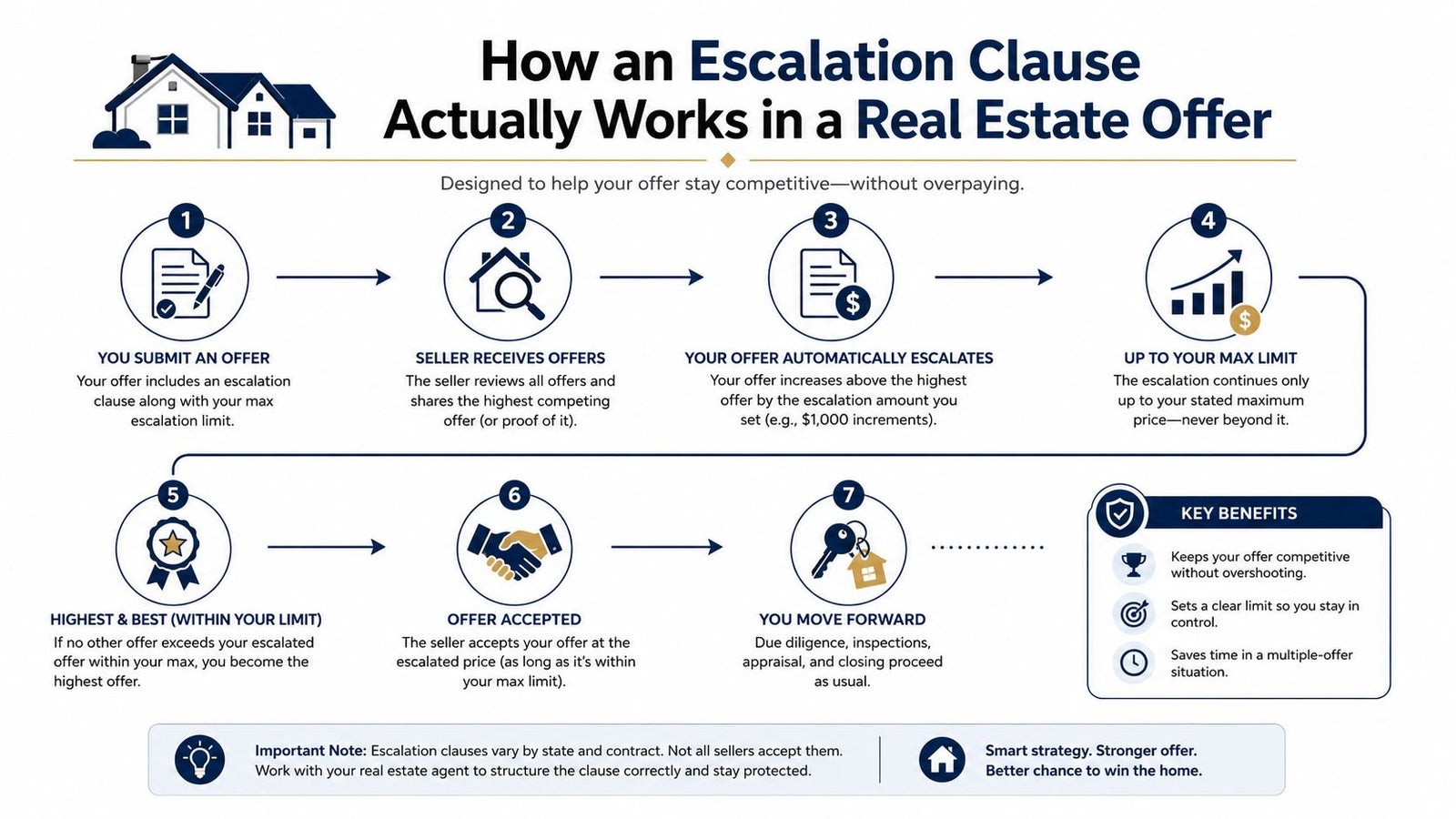
An auction paddle with a built-in ceiling. You start with a base bid, you agree to a fixed jump if a real competing offer appears, and you stop once you hit your cap. That's the whole mechanism. The point is to stay competitive without turning your offer into an open-ended promise.
The three moving parts are straightforward. First is the base offer, which is your opening number. Second is the increment, which is the amount you're willing to beat a verified competing offer by. Third is the price cap, which is the hard stop. In California-style guidance, those three controls are standard, and the clause should only activate when the seller can document a bona fide competing offer because brokers generally can't just hand one buyer's terms to another without proper authorization (Rocket Mortgage).
Here's the clean Vancouver example buyers use:
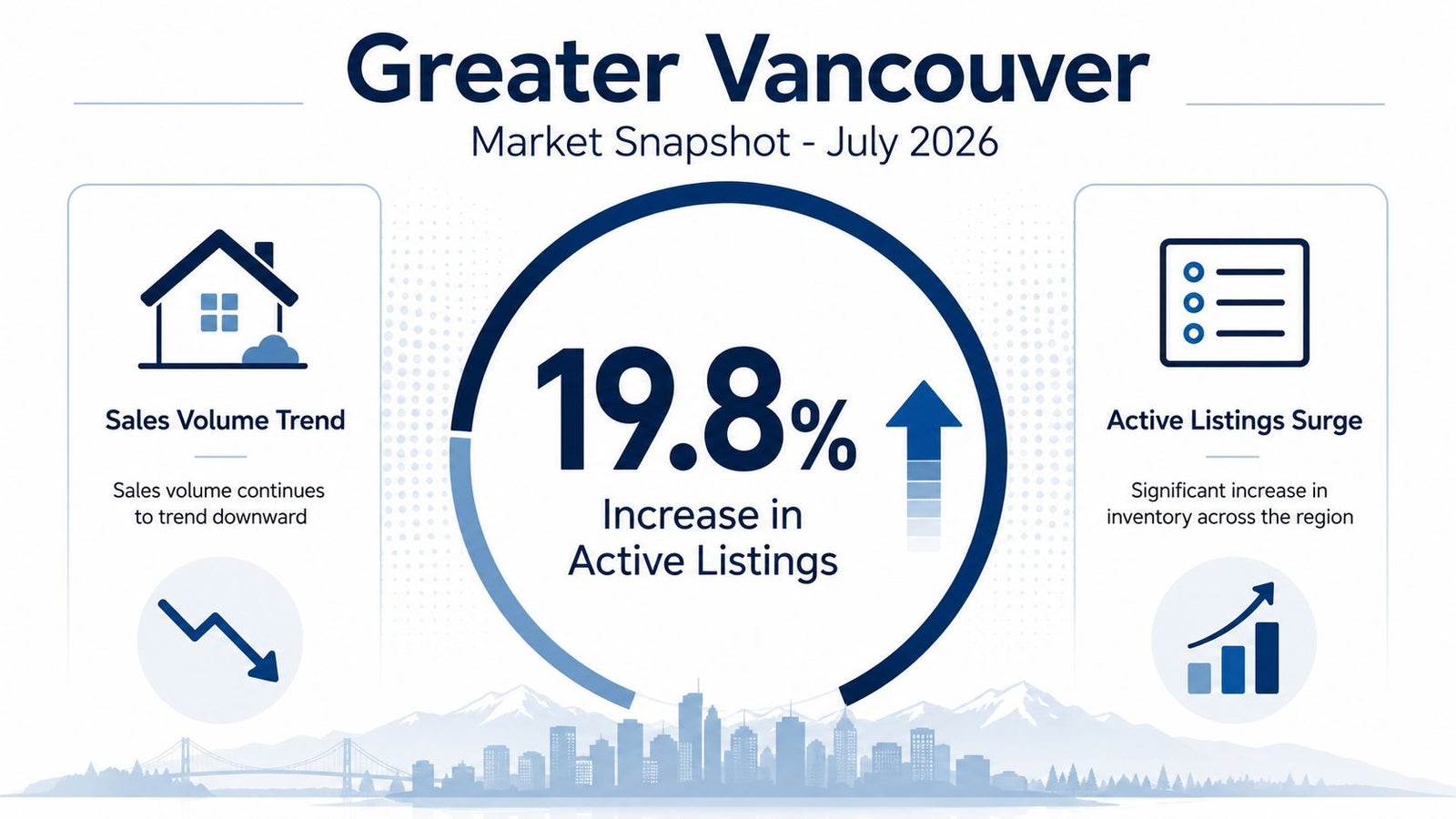
A buyer in Metro Vancouver can still benefit from an escalation clause, but only when the offer needs to compete for a property that is likely to draw real interest. That is the practical answer. In July 2026, the Real Estate Board of Greater Vancouver reported 3,277 residential sales, a 2.1% year-over-year increase, while active listings reached 17,094, up 19.8% from July 2025 and about 26% above the 10-year seasonal average, which is a different setup from the frenzy-market conditions where escalation clauses became a go-to tactic (NCREC bulletin).
That inventory backdrop changes how you should use the clause. When buyers have more choice, sellers usually have to work harder on price, presentation, and terms. In that kind of market, a strong offer is often cleaner than cleverer. A better deposit, faster dates, or fewer moving parts can do more for you than a clause that only matters if another buyer is already at the table.
I'd use escalation clauses selectively. They still belong in hot condo and townhome situations where a listing lands right with the market and several buyers show up at the same time. They make much less sense when a detached home has room to negotiate or when a seller is clearly looking for certainty rather than a bidding war.
You see that in real negotiations every week. A buyer who offers a sensible price, a workable deposit, and fewer conditions can look stronger than a buyer hiding behind a higher cap. The clause works as a controlled response to a real competing offer, where proof language matters as much as price. That is why escalation clauses are no longer the default move. They are a tactical tool for specific competition.
A BC buyer should never sign an escalation clause without knowing exactly which numbers are negotiable and which ones are not. The clause lives or dies on the details. In this market, a tight cap protects you from getting dragged into a price you can't finance, while a vague proof requirement invites arguments over whether the competing offer was real.
Here's sample wording a buyer might review with an agent or lawyer:
The variables matter because each one changes your risk profile. A lower starting price can keep the offer competitive at the front end. A modest increment avoids telegraphing panic. A hard cap keeps the deal tied to your financing. The proof language matters because BC buyers shouldn't rely on a handshake explanation when the seller's brokerage needs a defensible trigger.
The smartest buyers do not ask whether an escalation clause is good. They ask what it beats. In some deals, it is the right tool. In others, it only adds noise when the seller wants certainty and a clean path to the finish line.
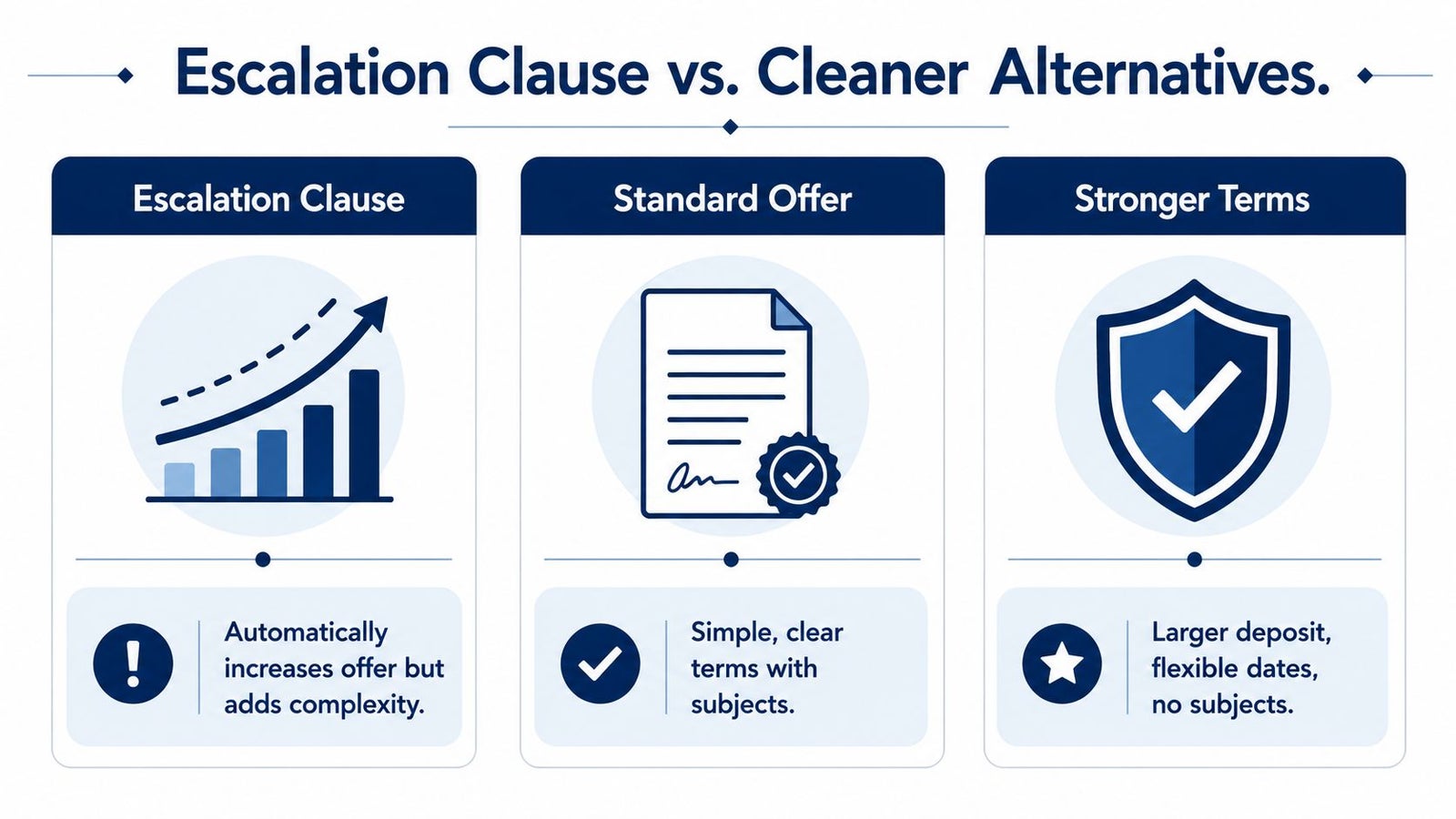
Here is the trade-off in plain language. A standard offer with subjects gives you protection, but it can look softer. A cleaner offer with waived inspection or financing subjects can stand out fast, but it pushes more risk onto you. An escalation clause sits in the middle. It lets you compete without revealing your full ceiling, though it can create confusion when sellers prefer straightforward terms.
That matters in Metro Vancouver because sellers often read the whole package, not just the headline price. In a detached home or luxury condo, a strong deposit, short completion, and simple terms can carry real weight. If the market is balanced, that kind of certainty can beat a higher number wrapped in condition language.
The danger isn't losing the bid. It's winning at a price the lender won't fully support. In a high-price market like Greater Vancouver, even a modest bump can turn into a cash problem at closing, because the appraisal doesn't always chase the contract price.
Here's how the sequence usually works. You win with the escalated offer. The appraisal gets ordered. The appraiser comes in short. The lender funds based on the appraised value, not the contract price. You cover the difference, renegotiate, or the deal slips into stress. That's why the clause needs to be judged against financing, not just against another buyer.
The risk gets sharper for first-time buyers and investors with thinner down payments. They have less room to absorb a gap if the property doesn't appraise where the offer landed. On a high-value Vancouver property, a gap doesn't need to be huge to hurt. It only needs to be bigger than the buyer's spare cash.
A buyer who pushes the price up aggressively should ask one blunt question: can I still close if the lender comes in short? If the answer is shaky, the clause is too aggressive. The market doesn't care that you “won” if you can't fund the last stretch.
If you want a broader financing lens on that risk, this local resource on interest rate changes and buyer behaviour is worth reading alongside your mortgage advice. The right offer isn't just the one that gets accepted. It's the one that survives appraisal, underwriting, and closing.
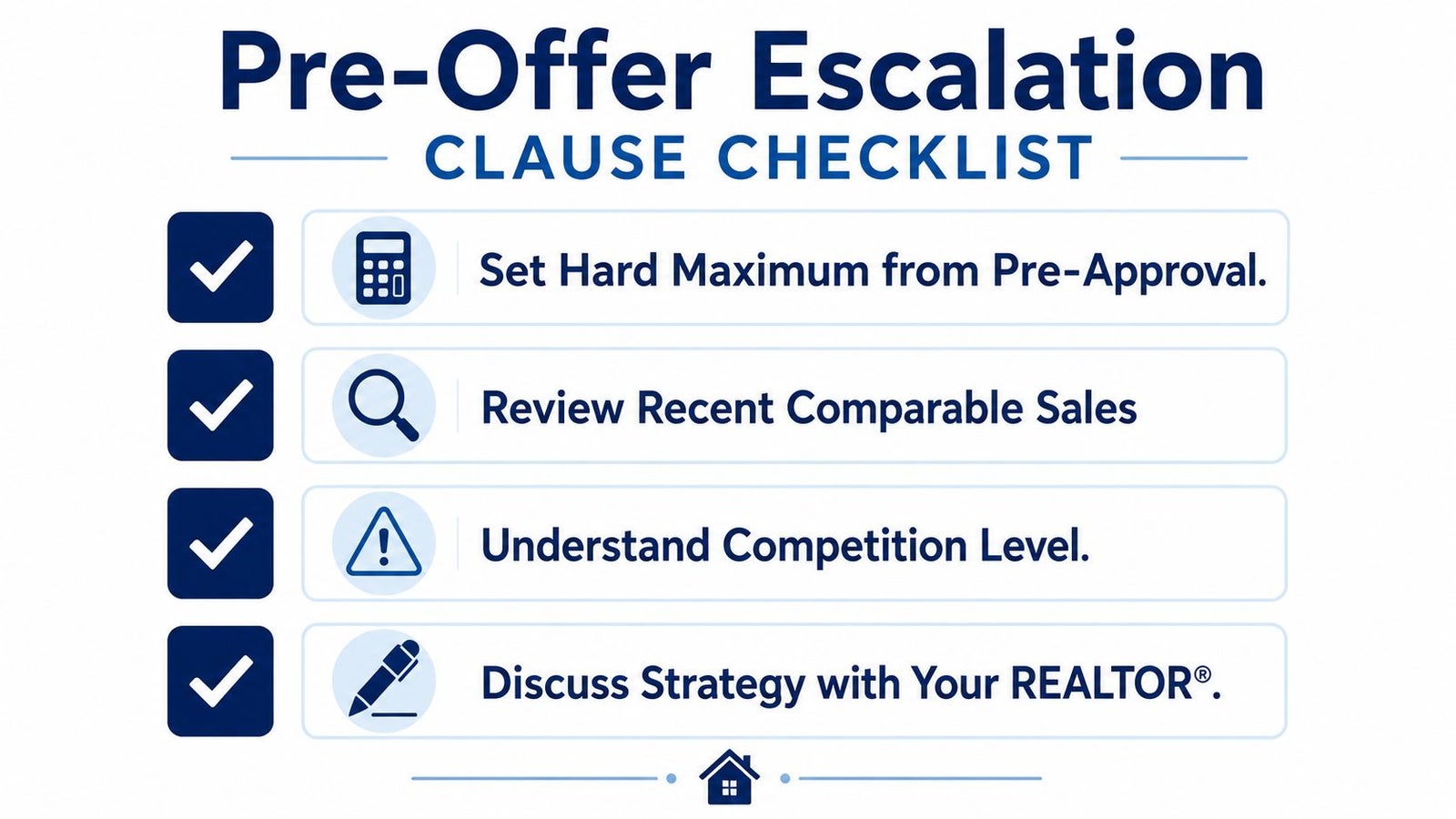
Start with your hard maximum, not your emotions. Then make sure the increment is small enough to stay disciplined, the proof standard is clear, and the appraisal gap plan is already decided if things go sideways. If the seller can't verify the trigger properly, the clause is weak from the start.
Use this checklist before you submit anything in Greater Vancouver:
If you want a straight answer on whether an escalation clause belongs in your next Vancouver offer, Jacky Levi - Sotheby's Realty Advisor & Realtor can review the competition level, structure the offer terms, and help you pressure-test the cap before you commit. Visit Jacky Levi - Sotheby's Realty Advisor & Realtor to take the next step with local advice that matches how Greater Vancouver deals get done.
The problem is that most buyers hear the term without hearing the strategy. They know it can help them compete, but they don't know when it makes sense in Metro Vancouver, how it affects appraisal risk, or what the wording should look like in a BC offer. If you're trying to buy in a market where clean execution still matters, you need more than a definition. You need a plan.
Why Buyers in Metro Vancouver Are Talking About Escalation Clauses Again
A buyer falls in love with a Burnaby townhouse, writes a solid offer, and then loses to someone who paid more. That's the moment when an escalation clause real estate strategy stops being theoretical and starts feeling like insurance against regret. It doesn't guarantee you win. It does let you compete without naming your absolute ceiling from the start.
That pressure still shows up in neighbourhoods where well-priced homes attract more than one serious bidder. Vancouver Westside, Burnaby, and Richmond can still produce that familiar multiple-offer tension, especially when a listing is well presented and priced close enough to the market to pull people in at once. In those situations, buyers often feel forced to choose between overreaching and walking away.
The reason this keeps coming back is simple. Buyers hate losing homes they could have afforded, and they hate revealing their full budget too early even more. An escalation clause gives them a way to stay in the game while keeping a lid on the final number.
"Practical rule: If you already know you'd be uncomfortable paying your ceiling, don't write it into an escalation clause. Write offers only on numbers you'd still defend the next morning."
For current local context, I'd also keep an eye on the supply side instead of assuming every listing deserves an escalation clause. A good place to start is this local market update on buyer demand and Metro Vancouver conditions. When inventory loosens, escalation clauses become less of a reflex and more of a case-by-case
How an Escalation Clause Actually Works in a Real Estate Offer
An auction paddle with a built-in ceiling. You start with a base bid, you agree to a fixed jump if a real competing offer appears, and you stop once you hit your cap. That's the whole mechanism. The point is to stay competitive without turning your offer into an open-ended promise.
The three moving parts are straightforward. First is the base offer, which is your opening number. Second is the increment, which is the amount you're willing to beat a verified competing offer by. Third is the price cap, which is the hard stop. In California-style guidance, those three controls are standard, and the clause should only activate when the seller can document a bona fide competing offer because brokers generally can't just hand one buyer's terms to another without proper authorization (Rocket Mortgage).
Here's the clean Vancouver example buyers use:
- You offer $1,050,000 as your base price.
- You add an escalation of $2,500 over a verified competing offer.
- You cap your total at $1,100,000.
- The seller produces proof of a bona fide competing offer.
- Your price only moves up as far as the clause allows.
- If another verified offer pushes past your cap, you stop.
- You either walk, revise, or decide you're done. tactic.
A useful distinction in practice is between automatic step-up language and loose, open-ended wording. BC buyers are usually better off with fixed jumps and a clear cap because the math stays predictable for lenders and for the buyer's own budget. It also forces everyone to deal with a documented trigger, not a rumour from a listing agent's voicemail.
If you want the mechanics stripped down even further, think of it this way. The clause is not a guess about what the seller wants. It's a controlled response to a real competing offer, and the proof language matters as much as the price itself.
If you want the mechanics stripped down even further, think of it this way. The clause is not a guess about what the seller wants. It's a controlled response to a real competing offer, and the proof language matters as much as the price itself.
Is an Escalation Clause Still Useful in Today's Greater Vancouver Market
A buyer in Metro Vancouver can still benefit from an escalation clause, but only when the offer needs to compete for a property that is likely to draw real interest. That is the practical answer. In July 2026, the Real Estate Board of Greater Vancouver reported 3,277 residential sales, a 2.1% year-over-year increase, while active listings reached 17,094, up 19.8% from July 2025 and about 26% above the 10-year seasonal average, which is a different setup from the frenzy-market conditions where escalation clauses became a go-to tactic (NCREC bulletin).
That inventory backdrop changes how you should use the clause. When buyers have more choice, sellers usually have to work harder on price, presentation, and terms. In that kind of market, a strong offer is often cleaner than cleverer. A better deposit, faster dates, or fewer moving parts can do more for you than a clause that only matters if another buyer is already at the table.
I'd use escalation clauses selectively. They still belong in hot condo and townhome situations where a listing lands right with the market and several buyers show up at the same time. They make much less sense when a detached home has room to negotiate or when a seller is clearly looking for certainty rather than a bidding war.
"Clean terms often beat a fancy clause when the market isn't on fire."
You see that in real negotiations every week. A buyer who offers a sensible price, a workable deposit, and fewer conditions can look stronger than a buyer hiding behind a higher cap. The clause works as a controlled response to a real competing offer, where proof language matters as much as price. That is why escalation clauses are no longer the default move. They are a tactical tool for specific competition.
Sample Escalation Clause Language and the Variables You Can Control
A BC buyer should never sign an escalation clause without knowing exactly which numbers are negotiable and which ones are not. The clause lives or dies on the details. In this market, a tight cap protects you from getting dragged into a price you can't finance, while a vague proof requirement invites arguments over whether the competing offer was real.
Here's sample wording a buyer might review with an agent or lawyer:
"Buyer agrees to pay $X as the initial offer price. If the seller receives a bona fide competing written offer that is higher than Buyer's offer, Buyer agrees to increase the offer by $Y over the competing offer, up to a maximum purchase price of $Z. Seller must provide written evidence of the competing offer sufficient to verify the trigger. This clause expires at the offer deadline unless accepted in writing."
The variables matter because each one changes your risk profile. A lower starting price can keep the offer competitive at the front end. A modest increment avoids telegraphing panic. A hard cap keeps the deal tied to your financing. The proof language matters because BC buyers shouldn't rely on a handshake explanation when the seller's brokerage needs a defensible trigger.
BC buyers also need to think about how this language fits the rest of the offer package. Standard forms and addenda can handle parts of this, but custom drafting may still be needed when the property is unusual or the competition is intense. If you're comparing offer language with pricing strategy, the discussion often starts with whether the list price is the signal you think it is, and this guide on asking price versus selling price in Vancouver is a useful companion.
Escalation Clauses Compared to Cleaner Offers and Stronger Terms
The smartest buyers do not ask whether an escalation clause is good. They ask what it beats. In some deals, it is the right tool. In others, it only adds noise when the seller wants certainty and a clean path to the finish line.
Here is the trade-off in plain language. A standard offer with subjects gives you protection, but it can look softer. A cleaner offer with waived inspection or financing subjects can stand out fast, but it pushes more risk onto you. An escalation clause sits in the middle. It lets you compete without revealing your full ceiling, though it can create confusion when sellers prefer straightforward terms.
That matters in Metro Vancouver because sellers often read the whole package, not just the headline price. In a detached home or luxury condo, a strong deposit, short completion, and simple terms can carry real weight. If the market is balanced, that kind of certainty can beat a higher number wrapped in condition language.
Judge the options by risk, not just price. If the property is likely to appraise tightly, a higher ceiling can create trouble later. If the seller is choosing between similar offers, cleaner terms may carry more weight than a clause that depends on another buyer showing up.
Use this rule. If you need flexibility, start with a regular offer. If you need speed and certainty, sharpen the terms. If the property is drawing a crowd and you want protection against overreaching, an escalation clause can be the right compromise. A local advisor should structure the offer around current market pressure, and that is where Jacky Levi - Sotheby's Realty Advisor & Realtor fits naturally into a buyer's toolbox, alongside legal and mortgage advice.
Use this rule. If you need flexibility, start with a regular offer. If you need speed and certainty, sharpen the terms. If the property is drawing a crowd and you want protection against overreaching, an escalation clause can be the right compromise. A local advisor should structure the offer around current market pressure, and that is where Jacky Levi - Sotheby's Realty Advisor & Realtor fits naturally into a buyer's toolbox, alongside legal and mortgage advice.
The Appraisal Gap Problem BC Buyers Underestimate
The danger isn't losing the bid. It's winning at a price the lender won't fully support. In a high-price market like Greater Vancouver, even a modest bump can turn into a cash problem at closing, because the appraisal doesn't always chase the contract price.
Here's how the sequence usually works. You win with the escalated offer. The appraisal gets ordered. The appraiser comes in short. The lender funds based on the appraised value, not the contract price. You cover the difference, renegotiate, or the deal slips into stress. That's why the clause needs to be judged against financing, not just against another buyer.
The risk gets sharper for first-time buyers and investors with thinner down payments. They have less room to absorb a gap if the property doesn't appraise where the offer landed. On a high-value Vancouver property, a gap doesn't need to be huge to hurt. It only needs to be bigger than the buyer's spare cash.
A buyer who pushes the price up aggressively should ask one blunt question: can I still close if the lender comes in short? If the answer is shaky, the clause is too aggressive. The market doesn't care that you “won” if you can't fund the last stretch.
If you want a broader financing lens on that risk, this local resource on interest rate changes and buyer behaviour is worth reading alongside your mortgage advice. The right offer isn't just the one that gets accepted. It's the one that survives appraisal, underwriting, and closing.
"Bottom line: A winning escalation clause that breaks financing is a bad win."
Your Pre-Offer Checklist Before You Sign an Escalation Clause
Start with your hard maximum, not your emotions. Then make sure the increment is small enough to stay disciplined, the proof standard is clear, and the appraisal gap plan is already decided if things go sideways. If the seller can't verify the trigger properly, the clause is weak from the start.
Use this checklist before you submit anything in Greater Vancouver:
- Set your ceiling from pre-approval: Don't let the clause outrun your lender.
- Review recent comparable sales: Anchor the offer to actual market evidence.
- Test the competition level: Only use the clause if there's real pressure.
- Confirm the proof language: The seller's brokerage has to be able to show a bona fide competing offer.
- Decide your appraisal response: Know whether you can add cash, renegotiate, or walk.
If you're still scanning listings, use this buyer guide to keep your timing and search plan aligned with current conditions: Vancouver homes for sale and 2026 buyer guidance. Then sit down with a Vancouver-area REALTOR® and a real estate lawyer before you sign. Escalation clauses are too easy to write badly and too expensive to clean up later.
If you want a straight answer on whether an escalation clause belongs in your next Vancouver offer, Jacky Levi - Sotheby's Realty Advisor & Realtor can review the competition level, structure the offer terms, and help you pressure-test the cap before you commit. Visit Jacky Levi - Sotheby's Realty Advisor & Realtor to take the next step with local advice that matches how Greater Vancouver deals get done.